Accelerated TMS
A full depression treatment, condensed into six days, Montpelier, VT
Or call 802-419-0500

THE SHORT VERSION
Depression treatment, in six days
Feel a shift sooner
Many patients notice a change by day three.
Modeled on SAINT
Built on Stanford's SAINT research.
Nothing in your system
No anesthetic, no sedation, no systemic medication.
Clinician-owned
Physician-led care, from evaluation to final session.
Accelerated TMS at State Street, in brief
What it is
An accelerated course of intermittent theta burst stimulation (iTBS), delivered over six days rather than seven or eight weeks. Based on Stanford's SAINT research.
What happens
Several (five to nine) short sessions a day, spaced 50 minutes apart, over consecutive days.
How long it takes
Six treatment days. Typically starting on a Friday, a break over the weekend, then Monday to Friday the following week.
Who it's for
Adults and adolescents (15–17 yrs) with major depression who want to feel better faster and who would rather not commit to seven to eight weeks of daily visits.
Cost
Cash-pay only. This protocol is not covered by insurance. Financing is available.
One thing to understand: the accelerated TMS protocol at State Street TMS is based on the SAINT protocol; it is not the official SAINT treatment, and we are not affiliated with Magnus Medical.
THE TREATMENT
What accelerated TMS involves
Standard TMS spreads treatment across seven to eight weeks of daily visits. Accelerated TMS compresses treatment into six days by delivering multiple short sessions a day.
Each session uses intermittent theta burst stimulation (iTBS), delivered to the left dorsolateral prefrontal cortex (LDLPFC), the mood-regulating region that runs underactive in depression. Sessions are spaced 50 minutes apart, a gap supported by the research to help the changes take hold.
There's no anesthetic, no sedation, and nothing entering your bloodstream. You stay awake throughout. The differences between the accelerated treatment and the standard treatment are mainly the scientific delivery, dosage strategy, remission rates, and the schedule.

Time Between Sessions
50min
Spaced to help the changes take hold
Our accelerated protocol is modeled on Stanford's SAINT research, but it isn't the official SAINT treatment, and we're not affiliated with Magnus Medical, which holds it. We use established, evidence-based targeting, and we're clear about exactly what you're getting.
Cost and coverage
What it costs
Accelerated TMS is a cash-pay treatment. It is not covered by insurance. That's not a State Street decision; accelerated protocols sit outside what insurers currently reimburse, wherever you go for them.
We give you the full cost of the treatment week at evaluation, before you commit to anything. Financing through CareCredit is available, and if you're weighing accelerated against standard treatment, we'll talk you through the trade-off honestly: standard is covered by most Vermont insurers and may be the more sensible route depending on your circumstances.
Cash pay
Standard TMS

Your clinicians
You're in expert hands
State Street TMS offers a comprehensive approach to your health and wellness. As an independent, clinician-owned, and community-based practice, we set ourselves apart by moving beyond standard treatment to deliver highly customized, personalized care in a welcoming, comfortable environment.
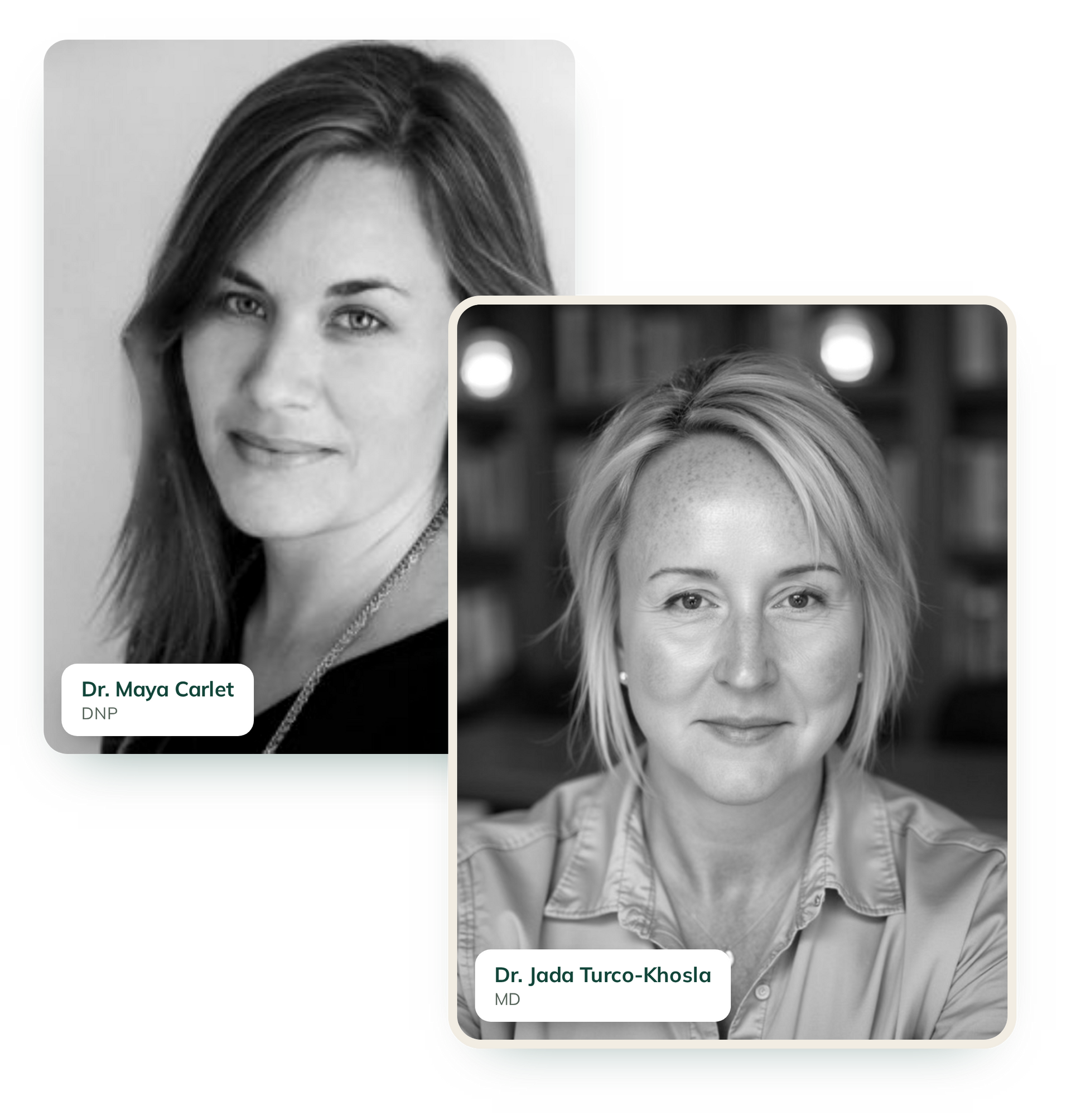
What truly distinguishes our practice is the combined, multidisciplinary expertise of Dr. Jada Turco-Khosla, MD, and Dr. Maya Carlet, DNP. Together, we blend integrative psychiatry, specialized medicine, metaphysics, and advanced precision neuro-interventions. Rather than a one-size-fits-all approach, your evaluation and treatment are tailored to support you as a whole being, with thorough, compassionate guidance at every step of your care.
She told me that my voice sounded “brighter”
At age 67, after requiring medicine for depression for about 35 years, I feel blessed to have discovered State Street TMS. I had taken just about every SSRI and SNRI available and ALWAYS at some point I felt like my brain would become reticent to the effect of the drug… I was done with this pharmaceutical merry-go-round and THANKFULLY transcranial magnetic therapy worked!
Every single day I am grateful to all the staff at State Street TMS. The atmosphere felt warm, inviting, and comfortable and the staff always did their best to accommodate any scheduling changes I needed. The best testimonial I received was from a lifetime friend whom I haven't physically seen for 6 years… she told me that my voice sounded “brighter” when we telephoned over the holidays!
Lallie M · Google review
How it works
From inquiry to final session
You send us a few details through the new patient inquiry form. We come back to you within 24 business hours to discuss next steps in scheduling a full evaluation with one of our clinicians, and to talk through whether the accelerated route fits your needs.

A full clinical evaluation with either Dr. Jada Turco-Khosla, MD or Dr. Maya Carlet, DNP confirms accelerated TMS is appropriate and safe for you, and that your depression is the kind this protocol is designed for. Because this is a cash-pay treatment, we're clear about the full cost before you commit.

Your cost, confirmed upfront
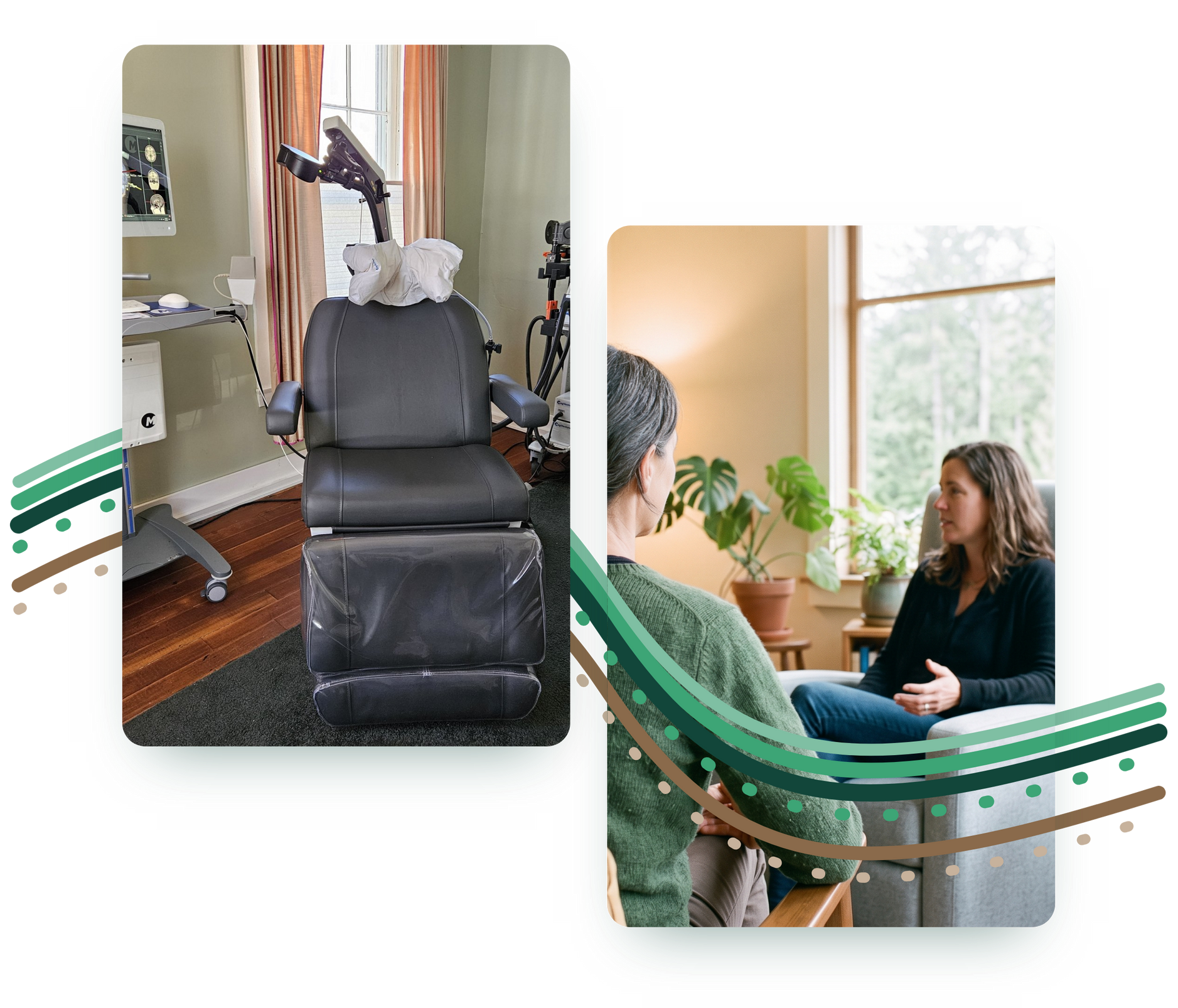
On your first day of treatment, we find your motor threshold and locate the coil position. This protocol utilizes precision targeting: our MagVenture Atlas neuronavigation system positions the coil against your own anatomy, so each session targets the same point rather than relying on scalp measurement alone. Depending on the protocol, there is an option to use your own MRI for more individualized targeting.
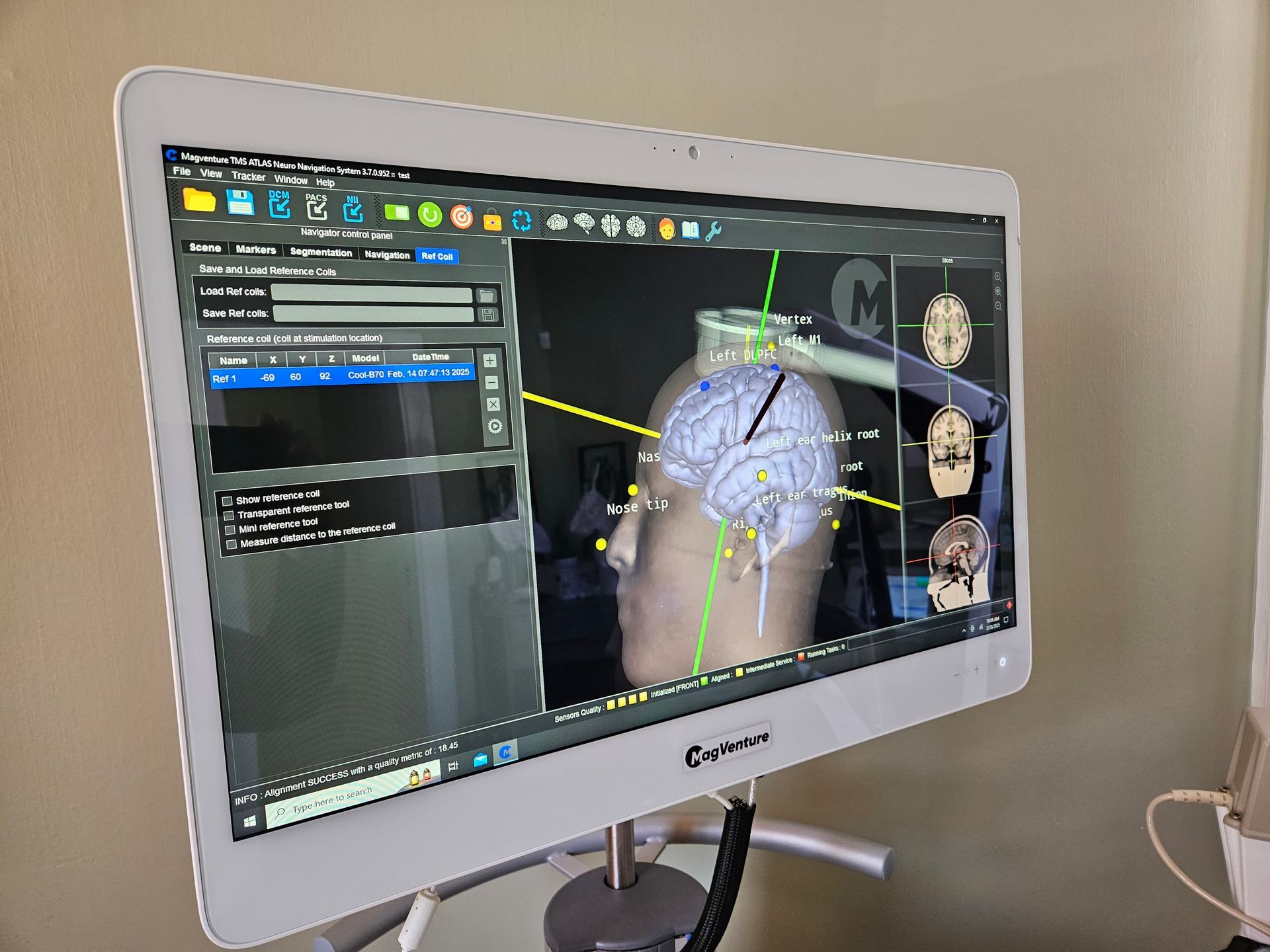
Neuronavigated targeting
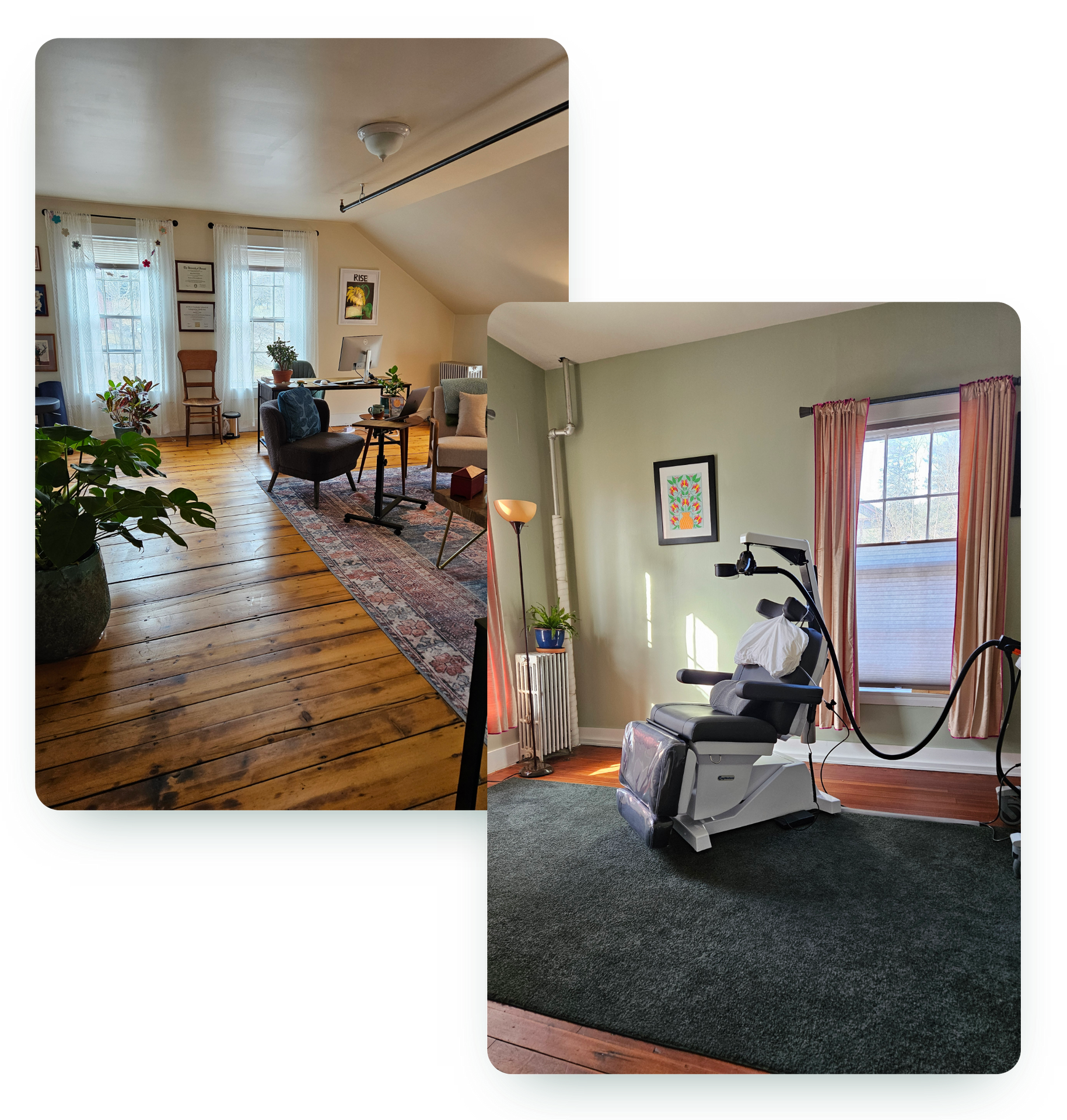
Five to nine sessions a day, each around nine minutes, spaced 50 minutes apart, across six treatment days. There are comfortable rooms in the clinic for your use between treatments. Most people bring a book, work, or something to fill the gaps between sessions. Many patients notice a shift in their depression by the third day.

Your clinical team tracks your response and plans what comes next (maintenance, standard sessions, or other support) before your week ends.
Reviewed as you go

Your cost, confirmed upfront
Neuronavigated targeting

Reviewed as you go
Your treatment week typically starts on a Friday, breaks over the weekend, then runs Monday to Friday the following week.
THE SCIENCE
Why compressing
treatment
works

Atlas neuronavigation
Your coil position, mapped to your own anatomy
Rather than estimating a spot on the scalp, neuronavigation guides the coil to the same mapped target every session.
WHO'S IT FOR
Is accelerated TMS a fit?
Adults and adolescents (15–17 yrs) with major depression who want to feel better faster.
- You have major depression and want faster results and higher remission rates
- Seven to eight weeks of daily visits isn't workable: travel, work, caregiving
- You'd like a non-medication, non-invasive approach to treatment
- You're traveling from outside central Vermont
- You can commit to a concentrated week
- You have a history of seizures or epilepsy
- You have metal implants or devices in or near your head
- You have a cochlear implant, deep brain stimulator or aneurysm clip
- You are pregnant, or think you may be
- Cost is a barrier: this protocol isn't insurance covered
We screen for all of this at evaluation. If accelerated TMS isn't right for you, clinically or practically, we'll say so, and talk you through the standard protocol or other options.
Questions
What people ask before they call
Is this the official SAINT protocol?
No. Our accelerated protocol is modeled on the SAINT research, but it is not the official SAINT treatment, and we are not affiliated with Magnus Medical. We use established evidence-based targeting to deliver an accelerated course. We're deliberately clear about this because the distinction matters.
How is this different from standard TMS?
Standard TMS is one session a day for seven or eight weeks and utilizes repetitive TMS (rTMS). Accelerated TMS is several sessions a day over six days of intermittent theta burst (iTBS) TMS. The main trade-offs are remission rates, time and cost: accelerated is far faster and has a remission rate as high as 90% compared to 50–60% remission rates for the standard protocol, but it's cash-pay, while standard is covered by most Vermont insurers.
Will insurance cover it?
No. Accelerated protocols aren't currently reimbursed by insurance. If cost is a concern, standard TMS is covered by most major Vermont payers and worth discussing. We also offer financing options for the accelerated protocol.
How quickly might I feel a difference?
Many patients report noticing a shift by around the third day of the treatment week. Response varies from person to person, and your clinical team will track how you're doing throughout.
Does it hurt?
Most people describe a tapping sensation on the scalp, uncomfortable for the first few sessions and then barely noticeable. A mild headache early on is common and usually settles.
Do I have to stop my medication?
No. In fact, we recommend as much as possible that there be no changes to medication during TMS treatment, and most patients stay on their medication. That being said, any changes are a clinical decision made between you and your prescriber.
What if accelerated isn't right for me?
We'll tell you at evaluation and talk through the standard protocol or other options. We'd rather steer you to the right treatment than sell you this one.

WHY US
Why State Street TMS
Six reasons people choose us.
What happens next
Ready to talk it through?
Request an appointment, and we'll arrange your evaluation and check your insurance so you know where you stand before committing to anything.